
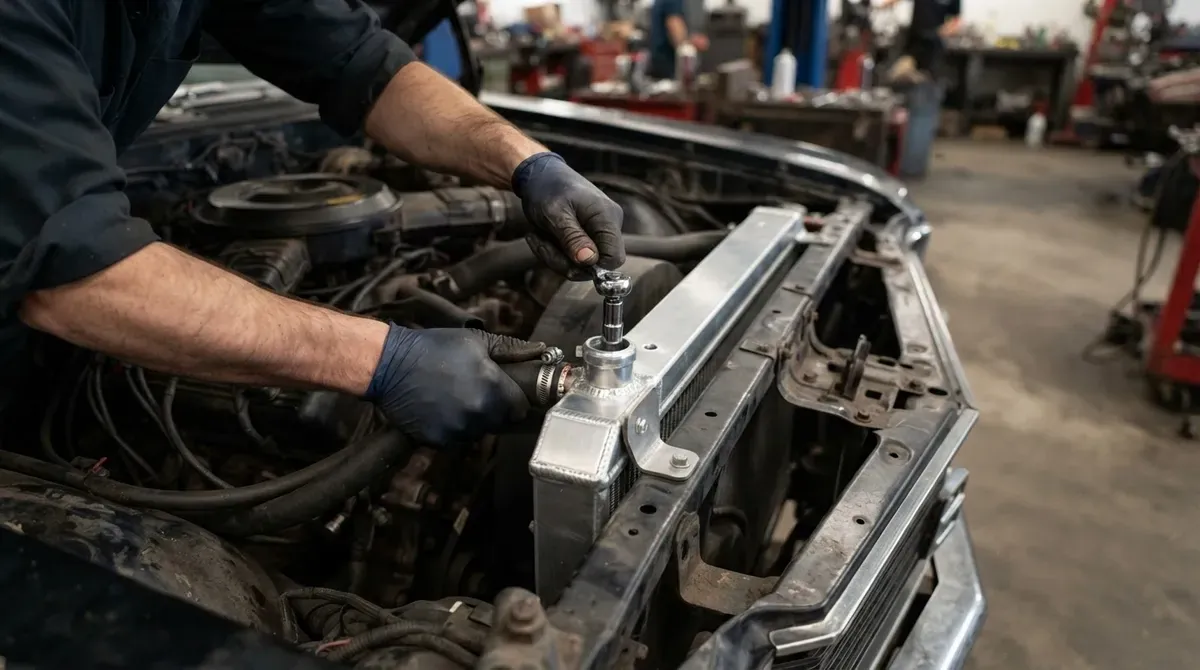
Radiator Replacements In Lancaster, TX
Radiator replacement and cooling system repair to prevent overheating and engine damage — quality parts, done right.
What Is a Radiator Replacement?
A radiator replacement removes a failing or damaged radiator and installs a new one, restoring your vehicle's cooling system so the engine stays at a safe operating temperature. It often includes new coolant, hoses, and a thermostat check.
At our Lancaster shop, we replace radiators and service cooling systems on all makes and models for drivers from Lancaster, DeSoto, Red Oak, Duncanville, Glenn Heights, Hutchins, Seagoville, Waxahachie, Grand Prairie, and Dallas.
- Radiator removal and replacement
- Coolant flush and refill
- Hose and clamp inspection
- Thermostat check
- Cooling system pressure test
- Leak diagnosis and repair
Why Radiator Replacement Matters in Lancaster, TX
Texas heat puts a heavy load on your cooling system. A failing radiator can't shed enough heat, and an overheating engine can suffer catastrophic damage — a warped cylinder head or blown head gasket costs far more than a radiator. Summer highs around Lancaster average 96°F in July and August, which leaves a weak cooling system little room.
Replacing a radiator at the first sign of trouble prevents that. A leaking or clogged radiator only gets worse, and driving overheated even once can ruin an engine. A radiator is far cheaper to replace than the engine it protects.
When Should You Consider Radiator Replacement in Lancaster, TX?
Have your cooling system inspected if your temperature gauge climbs, you see coolant leaks under the vehicle, or the coolant looks rusty or sludgy. After a front-end collision, the radiator should always be inspected. A sweet smell after driving, or steam from under the hood, also points to a leak.
Many radiators today have plastic end tanks joined to an aluminum core, and those seams crack with age and heat. A slow leak may only show as a coolant level that drops between top-offs. A front-end hit can push the radiator back or puncture its core, even when the leak is small at first. Having it looked at before driving far after a collision keeps a small leak from becoming an overheated engine.
What We Check During Radiator Service
Every radiator service starts with a full cooling-system inspection:
- Radiator condition — leaks, clogs, and fin damage
- Coolant level and condition
- Hoses and clamps for wear and leaks
- Thermostat operation
- Water pump and cooling fans
- Pressure test for hidden leaks
Radiator Replacement
We remove the old radiator and install a quality replacement, then refill with the correct coolant and bleed the system so there are no air pockets that could cause overheating. Air left in the system can create hot spots and false temperature readings, so bleeding it properly matters. The replacement is matched to the vehicle so it fits its mounts and hose connections.
A radiator is replaced when its core is clogged, its tanks are cracked, or it was damaged in a collision. Repairing a cracked plastic tank rarely lasts, so replacement is usually the lasting fix. Once it is in, the engine is run up to temperature with the system under pressure. That confirms the new radiator holds pressure and that the fan and thermostat work as they should.
Coolant Flush & Refill
Old, contaminated coolant loses its corrosion protection and can clog the radiator. A flush removes the old coolant and debris and refills the system with fresh coolant at the correct mixture. Mixing the wrong types of coolant can also form deposits that block the radiator's small passages.
Coolant does more than carry heat; it also protects the metal parts of the engine from corrosion. Its additives wear out over time, even when the level stays full. Old coolant can eat at the water pump, the heater core, and the radiator itself. Replacing it at the interval the vehicle's maker sets keeps the whole system healthy.
Hose & Leak Repair
Coolant leaks often come from aged hoses, clamps, or the radiator itself. We inspect the whole system, replace worn hoses, and repair leaks so the cooling system holds pressure. A hose that bursts on the highway can empty the system in minutes.
Rubber hoses harden, crack, and swell with years of heat cycles. A hose that feels soft and spongy, or hard and brittle, is near the end of its life. Clamps can loosen as the rubber shrinks, letting coolant seep at the joints. Replacing worn hoses before they fail costs little compared with an overheated engine.
Temperature Gauge Climbing
A rising temperature gauge means the cooling system can't keep up. Stop and have it checked before the engine overheats.
Coolant Leaks Under The Car
Bright green, orange, or pink fluid under the vehicle is coolant. A leak needs to be found and fixed before the system runs low.
Low Coolant Warning
Repeatedly low coolant means there's a leak somewhere in the system that needs diagnosis.
Rusty Or Sludgy Coolant
Contaminated coolant has lost its corrosion protection and can clog the radiator — time for a flush and refill.
Steam From The Hood
Steam means the engine is overheating. Pull over safely and turn it off to avoid serious engine damage.
Front-End Collision Damage
The radiator sits at the front of the vehicle and is often damaged in a collision, even if there's no visible leak.
Get a Quote
Tell us what your temperature gauge is doing or what you're seeing. We'll inspect the cooling system and quote before we start.
Call (972) 224-3909DRIVEN BY TRUST, HEAR FROM LANCASTER DRIVERS
Trusted by Drivers in Lancaster, TX
Frequently Asked Questions about Radiator Replacements
Your cooling system protects your engine. Explore our radiator replacement services in Lancaster, TX and let our team prevent overheating before it causes damage.
How long does a radiator replacement take?
How often should I replace my coolant?
Can a collision damage the radiator?
What causes a car to overheat?
Is it safe to drive with a coolant leak?
Do you use quality replacement radiators?
Radiator Replacement Near Lancaster, TX
I-35 Auto Painting & Collision Center provides expert radiator replacement for all makes and models near Lancaster, TX. We help drivers from Lancaster, DeSoto, Red Oak, Duncanville, Glenn Heights, Hutchins, Seagoville, Waxahachie, Grand Prairie, and Dallas get their vehicles back on the road after a collision or mechanical issue.
Radiator Replacement needs are common with Texas heat and heavy interstate traffic on I-35 E. Whether your vehicle took a hit in traffic or you've noticed a recurring issue, our team ensures the repair is done right the first time.
We're located at 1440 N Interstate 35 E Rd in Lancaster, right on Interstate 35 E. We proudly serve drivers from DeSoto, Red Oak, Duncanville, and surrounding areas.
1440 N Interstate 35 E Rd
Lancaster, TX 75134
(972) 224-3909
Mon - Fri: 8:00 AM – 5:30 PM
Saturday: 9:00 AM – 1:00 PM
Sunday: Closed